Every Project Should Leave Your Team More Capable

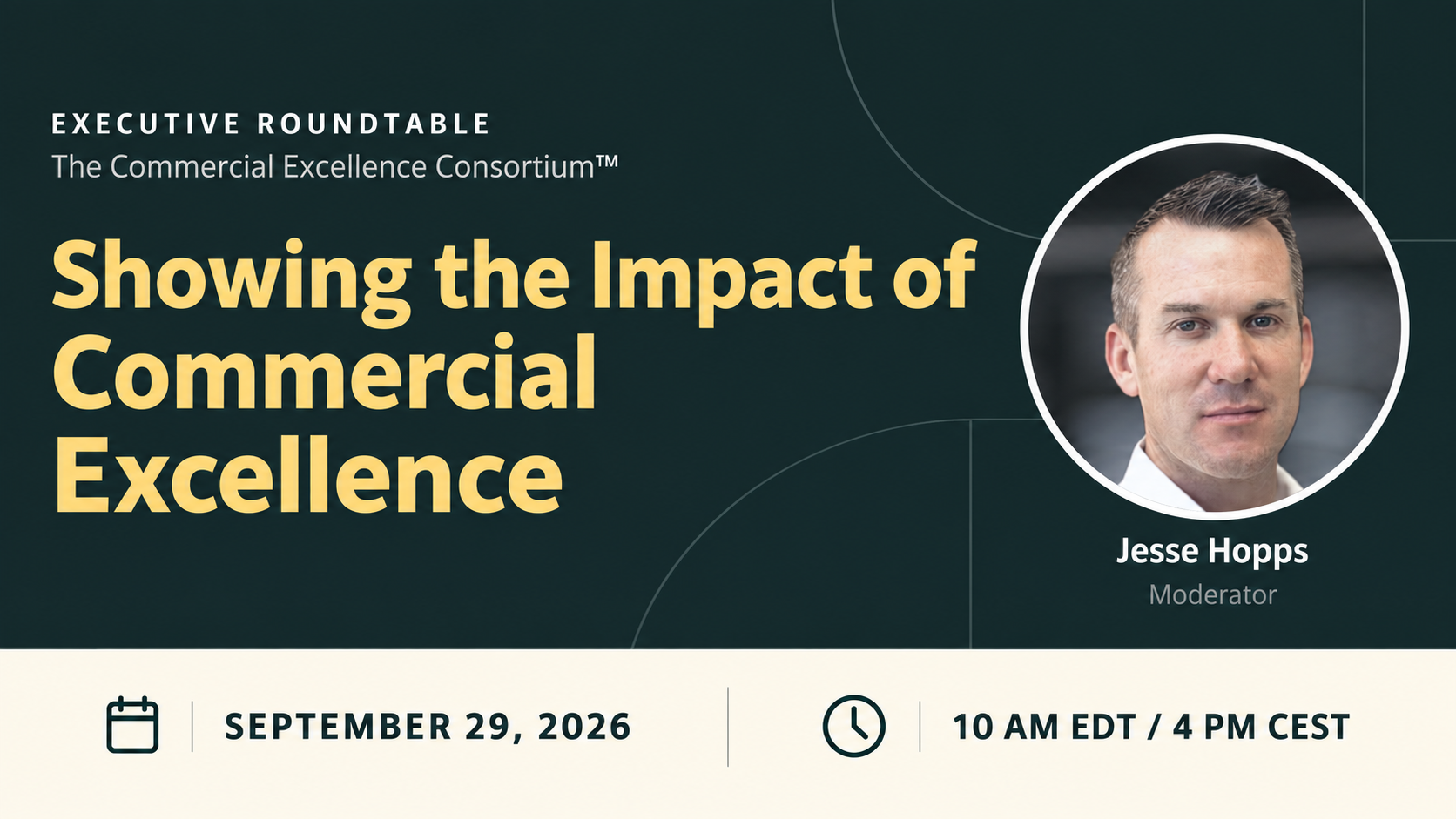
I recently participated in a Commercial Excellence Consortium roundtable about why organizations struggle to adapt, even when leaders agree on the direction.
One theme kept coming up: people are already busy. A new initiative lands alongside everything they were doing yesterday. Experienced employees are expected to adopt approaches they had little involvement in shaping. Managers are supposed to reinforce the change while dealing with their own competing demands.
Jesse Hopps captured these themes in his executive brief, Enterprise Adaptation Is Not a Change Management Problem. The conversation also got me thinking about our work at Demand Metric, and what it should mean to help an organization build capability.
We provide practical tools, frameworks, research, and guidance. Those resources can give people a useful starting point and save them considerable effort.
But our responsibility deserves to extend beyond the moment someone downloads a resource.
I want us to think carefully about what happens next.
Does that person understand how to apply it to their situation? Does it help them make a decision? Can they use it to move a business priority forward? And when the next challenge comes along, are they better equipped to work through it?
Those questions are shaping how I think about Demand Metric’s future.
A completed project should produce two things: progress on the business problem and a team that has learned something useful about solving it.
That second outcome is easy to overlook. We tend to pay attention to the deliverable, the deadline, and the immediate result. There is less room to consider whether people developed better judgment, learned how to test an assumption, or found a way of working they could use again.
Yet those are the things that can make the next project easier.
Someone who learns how to investigate a problem before jumping to a solution can apply that skill repeatedly. A team that gets comfortable challenging its own assumptions can make better use of new information. A manager who helps people work through difficult decisions can develop confidence that lasts beyond a particular initiative.
That is what capability building means to me in practical terms.
AI makes this especially relevant.
It can help us produce a plan, summarize research, explore options, or draft a business case. Those are useful applications, and we are incorporating AI into how we think about guided work.
It also makes it easier to arrive at a polished answer before we have done enough thinking about the question.
A document can look convincing while resting on an assumption nobody has checked. A recommended approach can sound sensible while overlooking the organization’s priorities, resources, or customers.
I want AI to help people examine their thinking as well as develop their outputs.
Consider a marketing team trying to improve its contribution to pipeline.
The obvious starting point might be a new campaign plan. But the team may first need to understand where the problem sits. Perhaps it is reaching the wrong accounts. Perhaps the offer is weak. Perhaps promising opportunities are getting lost during the handoff to sales.
Each explanation points toward different work.
A useful process would help the team examine the available evidence, hear from the people involved, and decide which problem deserves attention first. It would connect that decision to a business objective and establish what improvement should look like.
Only then would the team be in a position to choose the right resources and build a plan.
AI could help organize the evidence or suggest questions worth investigating. A practical framework could structure the analysis. An experienced colleague or coach could challenge a conclusion the team had accepted too quickly.
The people doing the work would still need to make the decisions, act on them, and learn from what happened.
This is where I see real value in the AI-Enabled Guided Pathways™ we are developing: connecting those activities into a process people can work through on their own or with a team.
Start with the organization’s context. Identify a meaningful priority. Examine the assumptions. Use relevant resources to support execution. Review the results and decide what to do next.
The guidance should make the work more manageable. It should help someone understand where to start, what deserves thought, and when another person’s experience would be useful.

The roundtable was also a useful reminder that a well-designed process still has to fit into someone’s working day. But capacity is only part of the story.
Being handed another assignment feels different from choosing a project you want to tackle. When people help select a challenge that interests them and matters to the business, there is room for intrinsic motivation: curiosity, the satisfaction of solving a worthwhile problem, and the desire to get better at something.
Think about how much you can get done the day before a much-needed vacation. Suddenly, you’re closing loose ends, making decisions, and finishing the task you’ve been putting off for two weeks. Apparently, your most effective productivity tool was an out-of-office message all along. Clearing your to-do list almost feels like part of the getaway, because you want to get it done.
That sense of personal ownership is what I want us to bring into projects. Give people a say in which problem they work on, room to shape the approach, and a clear connection between their effort and an outcome they care about. The work has a different feel when someone can say, “This is something I want to solve.”
We still need to be realistic about the time it requires. That may mean stopping an activity, simplifying an existing process, or agreeing that something else can wait. People need both a reason to care and the room to act on it.
The same applies to coaching. It needs a place in the work. A discussion about a live customer issue or an upcoming decision can give people an immediate opportunity to apply what they are learning.
I think this is where the human side matters most. People need room to question an approach, admit uncertainty, and draw on their own experience. They also need support when a situation becomes more complicated than the framework suggests.
As an initiative progresses, there should be time to capture what the team has learned. Which assumptions held up? What surprised people? What should they repeat, change, or avoid?
That learning becomes useful material for the next priority.
My ambition for Demand Metric is to help make this experience easier to repeat. Someone should be able to bring a real business challenge, find a practical way forward, and develop greater confidence and ability through doing the work.
When the next problem comes along, I want them to have a stronger starting point because of what they learned from the last one.